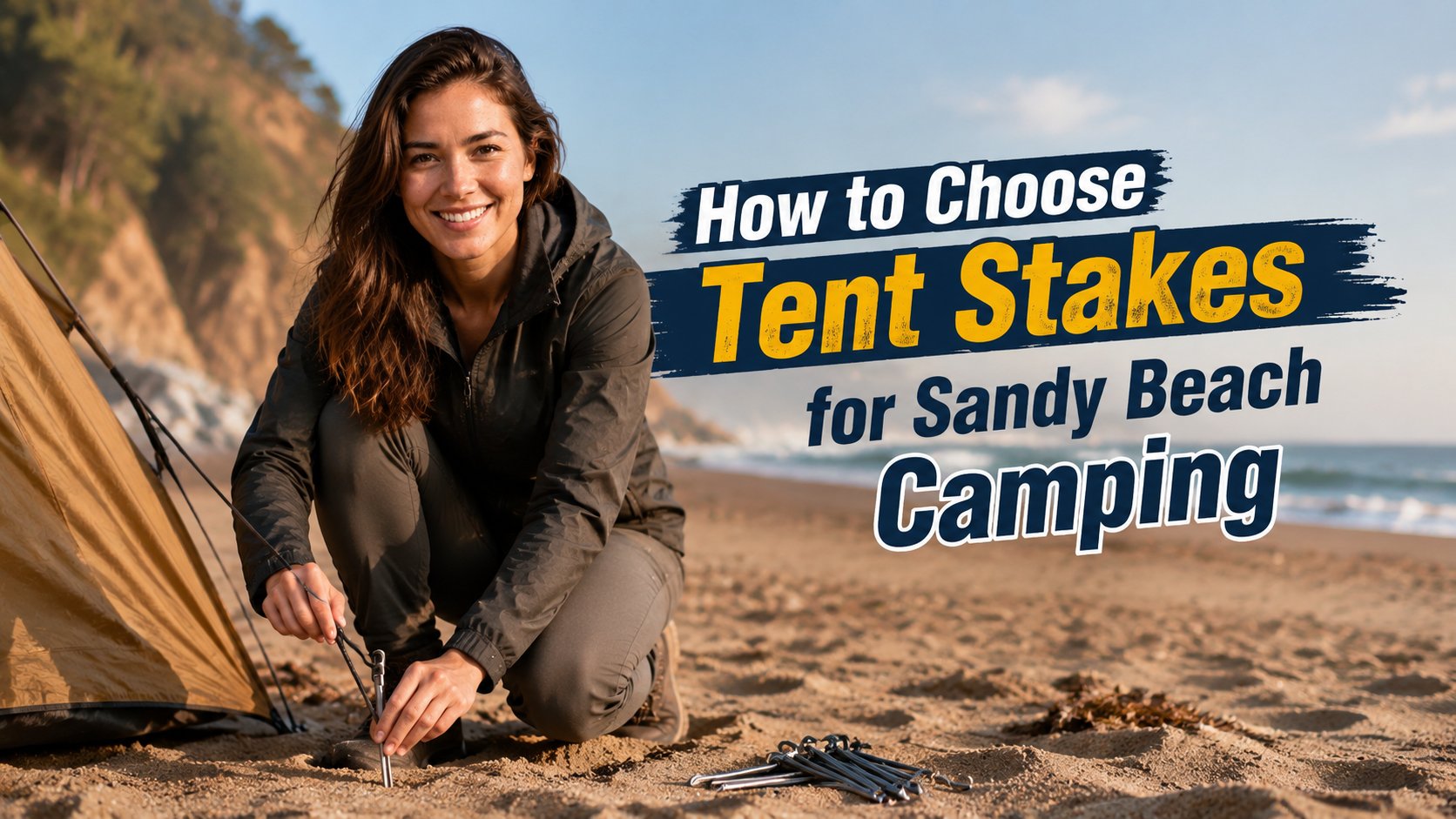
🏖️ TL;DR — Quick Verdict
Standard tent stakes fail in sand because they rely on friction that sand doesn’t provide. Three solutions work:
- Wide aluminum sand/snow stakes (paddle-shaped, 9–12 inches) — easiest and most reliable
- Spiral screw-in stakes — corkscrew into sand for mechanical grip
- Deadman anchors — bury anything heavy horizontally; works without specialized gear
The technique matters as much as the stake: drive at a 45° angle leaning away from the tent, bury at least 75% of the stake, and use 8–10 anchor points instead of the usual 4–6.
You set up your tent on a beach, pound in the same stakes you’ve used for years, and wake up to your rainfly flapping loose and your tent leaning sideways. The stakes haven’t broken — they’ve simply backed out of the sand under hours of wind tension. This isn’t a problem you fix with bigger or sharper stakes; it’s a problem you fix with a different kind of anchor.
This guide explains why standard stakes fail in sand, the three anchor types that actually work, and the DIY deadman technique that secures a tent on any sandy beach with no specialized gear at all.
A note on honesty: this is a research-based gear guide built from REI Expert Advice, OutdoorGearLab, MSR/Cascade Designs technical documentation, and SectionHiker. It is not a hands-on field test. Where we cite numbers, we cite the source.
Why Standard Tent Stakes Fail in Sand
The standard V-stake or Y-stake is designed for firm ground — it resists upward pull through friction along its full length. The sides of the stake press against compact soil; the soil presses back; the friction keeps the stake in place under wind load.
Sand doesn’t do this.
Sand grains are loose, round, and small. They don’t grip the sides of a stake — they shift around it. Any upward force on the stake (wind pulling the guyline) causes the surrounding sand to flow around the stake’s profile, gradually working it loose. By morning, the stake is out and your tent is moving.
🧪 The physics in one sentence: Standard stakes resist pull through friction. Sand provides no friction. Therefore standard stakes don’t work in sand.
The solution is to switch from friction-based anchors to surface-area-based anchors — anchors that resist pull by pressing against the sand above them, not by gripping the sand around them.
The 5 Anchor Types for Sand
Five solutions work in sand. Choose based on your trip frequency, budget, and how much specialized gear you want to carry.
| Anchor type | How it works | Holding power | Best for |
|---|---|---|---|
| Sand/snow stakes (wide aluminum) | Large surface area resists pull | High | Frequent beach campers |
| Spiral screw-in stakes | Threads create mechanical grip | High | Variable terrain |
| Long heavy-duty steel stakes | Depth + width combination | Medium-High | Car camping only (heavy) |
| Deadman anchors (DIY) | Buried mass resists pull | Very High | Anyone with a stuff sack |
| Plastic ground anchors | Wide paddle + light weight | Medium | Casual beach camping |
1. Sand/Snow Stakes (Aluminum Paddle Style)
The standard purpose-built solution. These are wide, flat, aluminum stakes — typically 9–12 inches long — that look more like a small paddle than a traditional stake. The wide profile provides the surface area that grippy-style stakes lack.
Pros:
- Designed specifically for the problem
- Lightweight (~1 oz each)
- Work in both sand and snow
- Aluminum resists salt corrosion better than steel
Cons:
- Less effective in rocky or root-filled ground (the wide profile gets blocked)
- More expensive per stake than basic stakes
What to look for: 9-inch minimum length, aluminum construction, holes at the head for guyline attachment, slight curve or U-shape (increases lateral stability).
2. Spiral Screw-In Stakes
The mechanical solution. Instead of pushing a stake into sand, you screw it in like a corkscrew. The spiral threads engage with sand grains and create a mechanical lock that wind tension alone can’t unwind.
Pros:
- High holding power
- Easy to install and remove
- Work in many soil types beyond sand
Cons:
- Heavier than aluminum paddle stakes
- More expensive per unit
- Can break if forced into rocky ground
What to look for: Plastic or metal corkscrew with at least 2.5 inches of thread depth, T-handle or loop at the top for installation grip.
3. Long Heavy-Duty Steel Stakes
The brute-force solution. 10-inch or longer galvanized steel stakes provide enough length and lateral surface area that they can hold in sand purely through depth — even though they’re not designed for it.
Pros:
- Cheap
- Wide availability
- Work surprisingly well if you have the muscle and the room
Cons:
- Heavy (4–6 oz each — bad for backpacking, fine for car camping)
- Steel rusts quickly in salt environments
- Bent stakes from rocky ground are a regular event
What to look for: Galvanized or coated steel, 10-inch minimum length, hook or U-shape at the top, 3/8” diameter or wider.
4. Deadman Anchors (DIY — No Specialized Gear)
The most flexible solution and the cheapest. A deadman anchor is any object buried horizontally in sand, with a guyline attached. The buried object resists pull by pressing against the compacted sand above it.
This is the technique to use if you forgot your sand stakes, your stakes failed, or you’re doing a one-time beach trip and don’t want to invest in specialized gear.
🛠️ How to make a deadman anchor:
- Fill a stuff sack or strong plastic bag with 20–40 pounds of sand.
- Tie your tent guyline to the drawcord (use a trucker’s hitch or taut-line hitch — these allow tension adjustment).
- Dig a horizontal trench 12–18 inches deep.
- Place the sandbag in the trench. The guyline should emerge from the trench at roughly the angle it’ll be tensioned.
- Bury the sandbag completely with sand from beside the trench, leaving only the guyline visible.
- Tamp the sand firmly above the buried bag.
What to use as the buried object:
- A dedicated sand anchor bag (purpose-built, ~$10)
- Any stuff sack filled with sand
- A heavy-duty trash bag with sand
- Rocks (if available — 20+ pounds of rocks tied in a bundle works)
- A long stick or branch buried horizontally with a guyline tied in the middle
5. Plastic Ground Anchors
The middle ground. Plastic paddle-shaped stakes are lighter than aluminum, completely rust-proof, and significantly cheaper. They’re not as durable under repeated heavy use, but for casual beach campers they’re adequate.
Pros:
- Cheapest sand-specific option
- 100% rust-proof
- Easy to drive in by hand
Cons:
- Can crack under heavy wind loads
- Less surface area than premium aluminum versions
- Easy to lose track of (often brightly colored to help)
What to look for: Reinforced plastic (not flimsy), 8-inch minimum length, hooked or notched head.
🎒 Want stakes matched to your trip type?
Tell us your destination, dates, and group size — we’ll generate your full camping gear list including stakes appropriate for your terrain and budget.
→ Generate My Checklist · Free · No signup · Vetted Amazon & REI picks
How to Install Sand Stakes Correctly
The right stake installed wrong is the same as the wrong stake. These principles apply to all sand-capable stakes:
Drive at a 45° angle, leaning away from the tent
The stake should lean in the same direction as the guyline pull. This forces the stake to compress sand against itself when the wind pulls, instead of allowing the stake to slip straight out.
Wrong: Stake driven straight down → easy pull-out under load Right: Stake driven at 45° leaning away from tent → maximum pull-out resistance
Bury at least 75% — 100% in loose sand
The deeper a stake sits, the more sand is on top of it to resist upward pull. For dry, loose beach sand, bury the entire stake — only the head with the guyline notch should be visible. In wet packed sand near the tide line (above the high tide mark), 75% burial is usually sufficient.
Use more anchors than you would on firm ground
A standard 2-person tent uses 4 stakes for the corners plus 2–4 for the rainfly guylines. On sand, plan for 8–10 anchor points total — every guyline point matters, and adding extra guylines is the cheapest way to spread wind load across more anchors.
Tension the guylines properly
Slack guylines let wind shake the tent, which loosens stakes over time. Use a taut-line hitch or a line tensioner to maintain consistent tension on every guyline through the night.
Beach-Specific Considerations Beyond Stakes
Stakes are only half the beach-camping equation. The site itself matters.
1. Never camp below the high tide line
⚠️ Tide line safety rule:
Always pitch above the highest visible debris line — driftwood, seaweed, foam marks on the sand. This line shows where the highest recent tide reached. In areas with significant tidal range (Pacific Northwest, parts of Atlantic Canada, Bay of Fundy), add 20–30 feet of margin above the debris line.
Check tide tables for your specific location before setting up. Most coastal areas have tide-tracking apps with daily predictions; many phones include tide widgets in weather apps.
A tent swept out by an incoming tide is bad. A sleeping camper swept out is potentially fatal.
2. Account for wind direction (it changes)
Beach wind patterns shift dramatically — onshore breeze during the day, offshore at night, sometimes reversing twice per 24-hour cycle. Pitch your tent so it’s stable in all expected wind directions, not just the one you encounter at setup.
Practical approach: orient the tent so the strongest expected wind hits the narrowest end (most tents are designed this way), and add extra guylines on the side perpendicular to the dominant pattern.
3. Watch for salt corrosion
Salt accelerates corrosion on metal stakes — especially steel. After every beach trip:
- Rinse stakes in fresh water to remove salt residue
- Dry completely before storage (damp + salt = pitting)
- Inspect for corrosion before the next trip; replace any stakes showing rust
Aluminum stakes resist salt better than steel but still oxidize over time. Titanium and plastic stakes are essentially salt-proof.
4. Wet sand vs dry sand
Sand near the water line that’s regularly wetted by waves is dramatically more compact than dry beach sand higher up. Wet packed sand holds stakes 2–3× better than dry loose sand. But never camp on wet sand — the tide will reach it.
The compromise: pitch above the high tide line where the sand is slightly damp from morning dew or recent rain rather than bone-dry. This balance gives you holding power without flood risk.
🌊 Want your beach kit done for you?
Plug in your trip type, location, and dates. We’ll generate a complete gear list including stakes, tarp, and weather gear sized for coastal conditions.
→ Build My Personalized List · Takes 30 seconds
What to Look For When You Shop
If you’re building a beach-ready stake kit, here’s how to allocate your gear and budget.
The minimum kit for occasional beach camping (~$25)
- 8 plastic paddle stakes (~$15)
- 1 stuff sack you already own (free — for deadman anchor backup)
- Extra paracord for guylines if your tent didn’t include enough (~$10)
Sufficient for warm-weather, mild-wind beach trips.
The reliable kit for regular beach campers (~$60)
- 8 aluminum sand/snow stakes (~$30–$40)
- 2 dedicated sand anchor bags (~$10)
- Pre-tied guyline tensioners (~$10)
- Microfiber towel for stake rinsing post-trip (~$10)
Handles most beach conditions including moderate wind events.
The serious kit for windy coastal regions (~$120)
- 8 premium aluminum sand/snow stakes
- 4 spiral screw-in stakes (for variable terrain)
- 4 dedicated sand anchor bags
- Heavy-duty guylines with built-in tensioners
- Storage organizer for rinsing/drying setup at home
For Pacific Northwest, Atlantic Northeast, or anywhere wind regularly exceeds 25 mph.
5 Mistakes Beginners Make at the Beach
- Using standard V-stakes from their regular tent kit. They won’t hold past the first wind gust. Bring stakes specifically rated for sand.
- Driving stakes straight down instead of at 45°. Vertical stakes pull straight out under load. The angle is non-negotiable in sand.
- Pitching too close to the water line. Even if the tide isn’t actively rising when you set up, it changes through the night. Use the debris line, not your eye.
- Skipping extra guylines. A tent designed for 4–6 stakes on firm ground needs 8–10 anchor points on sand. The extra guylines spread load across more anchors.
- Not rinsing stakes after the trip. Salt damage shortens stake lifespan dramatically. A 60-second rinse with fresh water before drying extends life by years.
Frequently Asked Questions
Why don’t regular tent stakes work in sand?
Standard V-stakes and Y-stakes are designed for firm soil — they resist upward pull through friction along their length. Sand doesn’t provide that friction. The grains shift around the stake under any load, and the stake either pulls straight out under wind tension or slowly works loose overnight. For sand, you need anchors that resist pull through surface area (wide stakes) or buried mass (deadman anchors), not friction along a narrow profile.
What is the best type of tent stake for sand?
Three types work reliably in sand: sand/snow stakes (wide aluminum paddles 9–12 inches long), screw-in spiral stakes (corkscrew design that threads into sand), and the deadman anchor technique (any object buried horizontally, including sand-filled bags). For most beach camping, a set of 6–8 dedicated sand/snow stakes is the easiest solution. For occasional beach trips, the deadman technique with a stuff sack and sand costs nothing.
How do I make a deadman anchor for my tent?
Fill a stuff sack or strong plastic bag with 20–40 pounds of sand, tie your tent guyline to the drawcord, and bury the entire bag horizontally 12–18 inches deep with only the guyline emerging from the sand. The buried mass provides anchor strength through surface area pressing against compacted sand above it. Rocks can replace sand-filled bags using the same principle. This technique works without any specialized stakes.
At what angle should I drive tent stakes into sand?
Drive stakes at a 45-degree angle leaning away from the tent, with the top of the stake pointing in the direction the guyline pulls. This orientation resists pull-out by forcing the stake to compress sand against itself rather than slip through. Bury at least 75% of the stake length; in loose dry sand, bury 100%. The deeper and more angled, the more holding power.
Will salt water damage my tent stakes?
Yes — especially steel stakes. Salt water and salt air accelerate corrosion dramatically. Aluminum stakes (most sand/snow stakes are aluminum) resist salt corrosion much better than steel, though they’ll oxidize over time. Plastic and titanium stakes are essentially salt-proof. After every beach trip, rinse your stakes in fresh water and dry them fully before storage to extend lifespan.
How many tent stakes do I need for beach camping?
More than you need for regular ground. A typical 2-person tent uses 4–6 stakes on firm ground; on sand, plan for 8–10 anchors including extra guyline attachments. The reason: each individual anchor holds less in sand, so you spread the load across more points. Bring at least 8 sand stakes for a 2-person tent and 10–12 for a larger family tent.
Can I camp directly on the beach below the high tide line?
Never. Camping below the high tide line risks your tent, gear, and personal safety being swept out by rising water. Always pitch above the highest visible debris line (driftwood, seaweed, foam marks), which indicates the high tide reach. In areas with significant tidal range, add an extra 20–30 feet of margin. Check tide tables before setting up — most coastal areas have tide-tracking apps with daily predictions.
Verdict — The Beach Stake System
If you remember nothing else from this article:
🏖️ The beach anchoring system in one paragraph:
Use aluminum sand/snow stakes (8–10 of them) or the DIY deadman anchor with a sand-filled stuff sack buried 12–18 inches deep. Drive every stake at a 45° angle leaning away from the tent, bury 75–100% of its length, and add extra guyline attachments to spread wind load. Pitch above the high tide debris line with margin for tidal range, and rinse stakes in fresh water after every trip to prevent salt corrosion.
For related camping skills and gear decisions that connect to beach camping:
- Camping in the Rain: 15 Essentials — coastal areas are often wet weather scenarios
- Tent Condensation Prevention — beach humidity makes condensation common
- What to Pack for a 3-Day Camping Trip — the Ten Essentials baseline including extra cordage
- Down vs Synthetic Sleeping Bags — synthetic is the safer choice for humid coastal trips
🏖️ Ready for the beach? Let us build your kit.
Plug in your trip type, destination, and dates. We’ll generate a complete checklist including stakes, tarp, weather gear, and sleep system sized for coastal conditions. All vetted from Amazon and REI.
→ Generate My Camping Checklist · Free · No signup · Built for first-time beach campers
Sources referenced: OutdoorGearLab: Best Tent Stakes Tested · CleverHiker: Best Tent Stakes 2026 · SectionHiker: How to Set Up a Tent on Sand · Field & Stream: The Deadman Anchor · The Hiking Tribe: Deadman Anchors in Sandy Soil · Slower Hiking: How to Stake and Guy Your Tent
Disclosure: TrailPackList earns commissions through the Amazon Services LLC Associates Program and the REI affiliate program when readers click through and purchase. We do not accept payment for placement in our checklist generator.
Planning your trip?
Use our free checklist generator to build a personalized gear list in seconds.
Build my checklist →